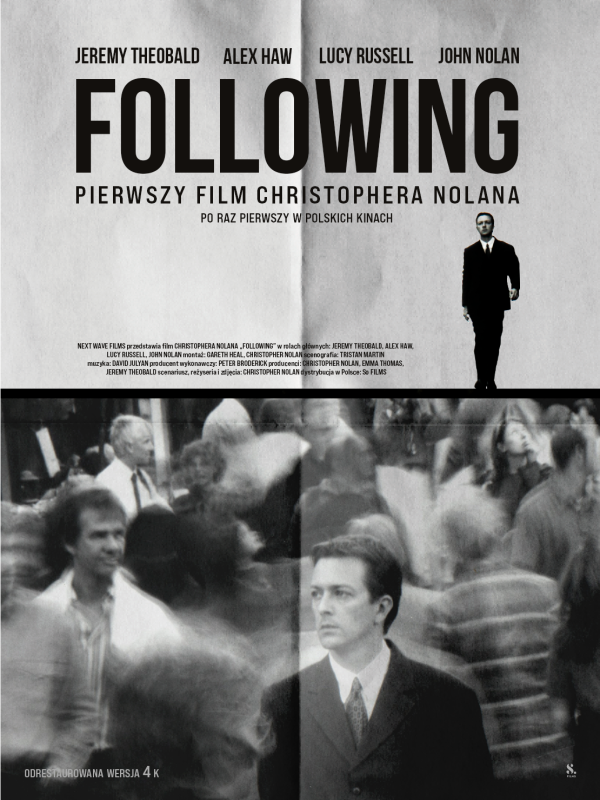
Following
Here is the English translation of the text, preserving its analytical and cinematic tone:
Christopher Nolan’s feature-length directorial debut serves as a manifesto for his future cinema: labyrinthine narratives, an obsession with control, and a fascination with the fluid nature of identity.
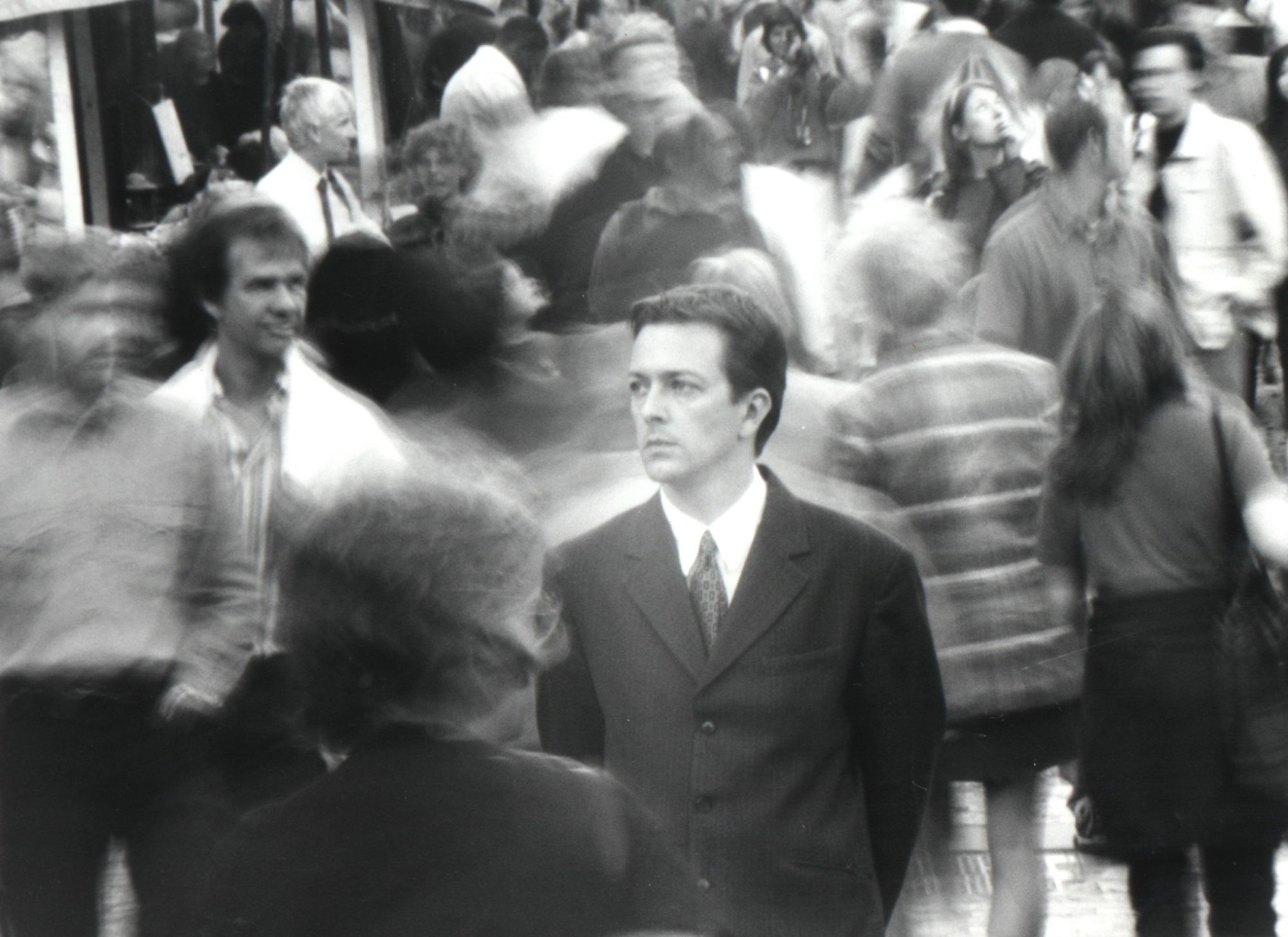
Shot on a shoestring budget (a mere $6,000!) in black and white, using natural light and the London apartments of the director's friends, Following remains one of the most distinctive examples of 1990s independent cinema.
The film's protagonist, an unnamed young writer, begins following random people on the streets of London, treating them as raw material for his observations. What starts as an innocent fascination, however, quickly turns into a dangerous ritual when he meets Cobb, a charismatic burglar—a guide through a world of manipulation, performed identity, and moral disorientation. Nolan leads the viewer through a series of seemingly unrelated events, shattering linear storytelling and forcing the audience to constantly reconstruct reality.
This early film already reveals all the motifs that would later define the work of the creator of Memento, Inception, and Oppenheimer: fragmented memory, distrust of perception, characters trapped in the constructs of their own minds, and time used as a tool for dramatic manipulation. Following functions as a blueprint for Nolan's future style, yet it remains a remarkably raw and intimate work—an urban noir about loneliness, obsession, and the desire to take control of someone else's life.
The film will be presented in a digitally restored picture and sound version, the preparation of which Christopher Nolan personally supervised.
-
Język
-
angielski
-
napisy polskie
-
-
-
Bilety
-
Tani poniedziałek:
-
normalny — 16 zł
-
ulgowy — 14 zł
-
z kartą widza — 12 zł
-
-
Od wtorku do piątku:
-
normalny — 20 zł
-
ulgowy — 18 zł
-
z kartą widza — 14 zł
-
-
Sobota i niedziela:
-
normalny — 22 zł
-
ulgowy — 20 zł
-
z kartą widza — 15 zł
-
-