All of Us or None
Opening — 17/07/2026, 19:00
Imran Perretta is a British artist working across film, sound, performance and poetry. He is one of the most compelling voices in contemporary European art today. His practice stems from the experience of living in a world of inequality and social tensions, accompanied by a need to oppose acts of war and systemic forms of exclusion. In his works, he addresses themes of power, state surveillance and otherness. The artist examines rising Islamophobia and the processes of identity formation among young people with migrant, often Muslim, backgrounds.
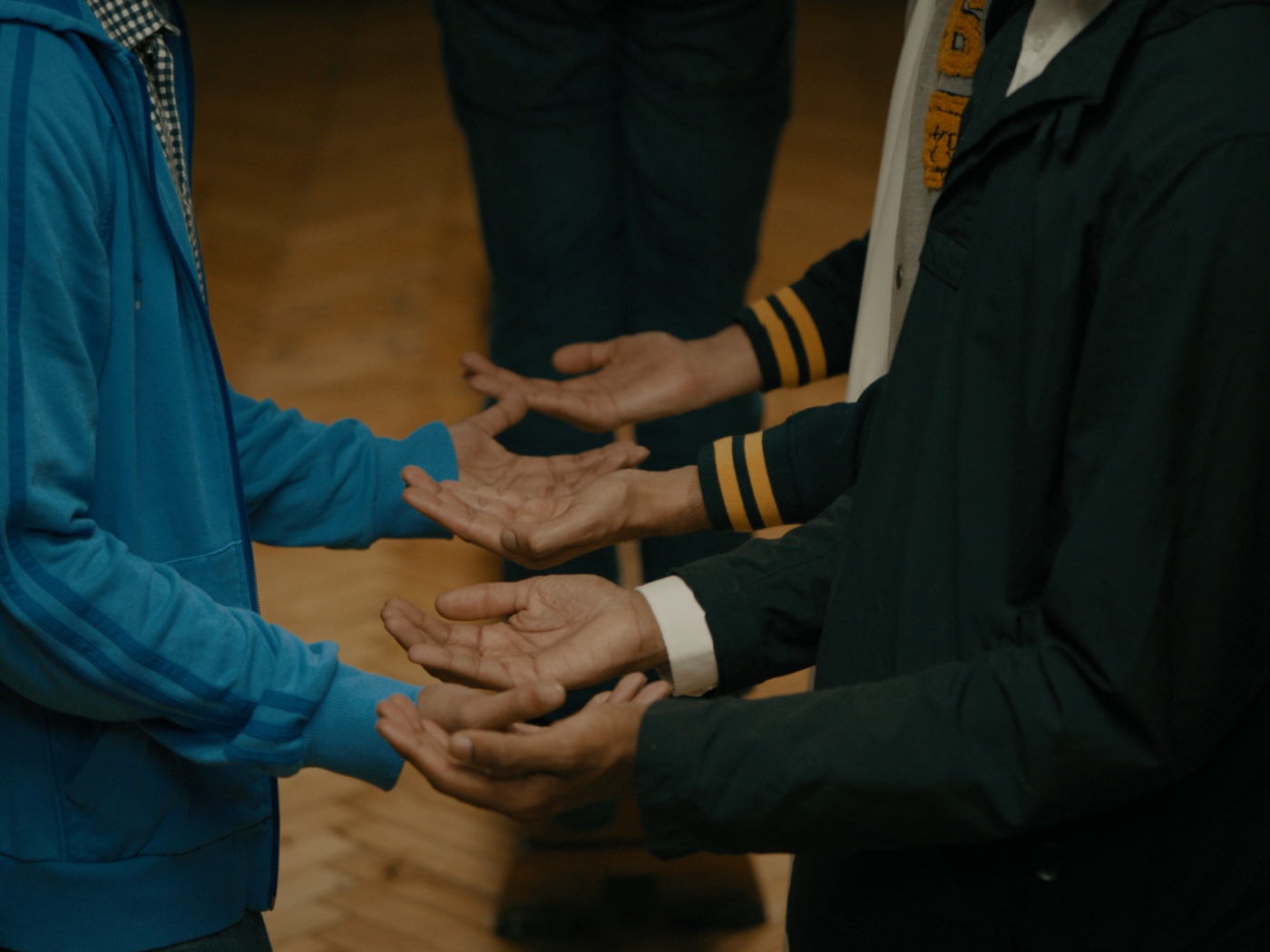
Perretta’s first solo exhibition in Poland opens with an immersive sound installation. Here, sound operates directly on the body and emotions, producing tension and regulating affect through techniques drawn from military technologies as well as the film industry. In the next gallery, the two-channel installation the destructors is presented – a work shown concurrently at Tate Britain. The film centres on a group of young men from Muslim backgrounds, navigating social pressure in a world that, in the aftermath of 11 September 2001, has come to perceive them as both a physical and ideological threat. Within a space shaped by sound and precisely choreographed imagery, the characters’ monologues reveal personal and collective experiences of marginalisation, surveillance and alienation. Shot in a former school building now functioning as a youth centre and care facility, the film situates its protagonists within a decaying architecture that becomes central to the narrative. As the work unfolds, tension intensifies while smoke and water slowly enter the building – a metaphor for the gradual erosion of public space and the collapse of civic infrastructure for racialised and working-class communities.
The theme of exclusion returns in the work 15 Days. The video is rooted in the artist’s time spent in northern France with people displaced after the dismantling of the migrant camp near Calais – known as the ‘Jungle’ – in 2016. The camp had provided temporary shelter for thousands of people from Sudan, Afghanistan, Eritrea and Syria, fleeing war, persecution and economic instability. Perretta focuses on the experience of prolonged suspension, placing fragile temporariness at the centre and emphasising the dignity of those living on the margins of Europe’s political reality.
-
We invite you to the exhibition opening on 17 July at 7:00 pm.
-
Leave your email address to receive electronic invitations to this and future events.
-