What is a mother?
As she handed the starter to the artist, the curator said, “Take care of her. Help her create. Let her give life.” The artist hoped to use the starter to bake a beautiful loaf of bread—so that the mother might give rise to new possibilities.
This was to be her first sourdough bread. She had no experience with baking; she was a cook, accustomed to cooking, and bread had always intimidated her—especially Western bread, with its rectangular or domed forms, technical, measured, made to be displayed and admired. Earlier that year, she had managed to bake traditional flatbreads: smaller, less arrogant, more forgiving than Western loaves. Back then, she used a recipe without a starter, which freed her from the need to continue a lineage, to become part of a narrative.
The starter is the mother of fermentation—without her, nothing can begin. She carries within her the DNA of what is to come. The mother is demanding: she must be cared for, and she must give birth; otherwise, she dies. In fermentation, she sacrifices herself to new life, yet must remain part of it. There is no way around it: if the mother does not become another mother, everything ends. Not wanting to be part of an ending this time, the artist followed the curator’s guidance and set out to bake her first sourdough bread.
It began at night. She had just arrived at a residency abroad, and the kitchen she was to use felt like unfamiliar territory. To warm up, she roasted fermented tea leaves. They turned out beautifully, which gave her confidence—the kitchen felt welcoming. She took the jar from the curator, unscrewed the lid, and smelled it: slightly sour, faintly alive. She mixed the starter with rye flour and water, working the dough until it turned sticky, just as instructed, then covered it with a damp cloth, placed it somewhere warm, accepted that she no longer had control over the process, and went to bed.
She woke early and checked the dough, which had been fermenting all night. It had risen beautifully. Now she needed to add more flour and water and shape the loaf. Midway through, she remembered she was supposed to set aside a portion for a new starter—but she had already added some grains. A flicker of panic: would the grains spoil the mother? She hoped not.
The process continued, but she didn’t know what the dough should feel like—she had never baked rye bread before. Should it be this sticky? Should she add more flour? Knead by hand, or use a mixer? Eventually she stopped adding flour—the dough kept absorbing it greedily without gaining structure. She transferred it into a tin and left it alone.
She felt exhausted, disoriented. She went back to bed.
She fell asleep and had a striking dream. She dreamt of the lover she had been with the longest. He kissed her, and wanted to make love to her. There was a small boy in the room; he paid no attention to him, and she asked no questions.
She woke up with the urge to call him. Without questioning it, she did. He answered. They hadn’t spoken in two years.
“Are you happy?” he asked.
“Do you have a son?” she replied.
“He’s due today,” he said.
Certain events in her life had led her to believe she was incapable of being a mother—to children, or to men who had already been broken. She thought children would prevent her from doing what mattered to her. Those close to her joked she wouldn’t be able to tolerate a child—she took it as a blow, one she accepted and surrendered to. The only child she imagined she could love would be one conceived with the lover from her dream—the same man who was now becoming a father.
She cried into the phone, not hiding her tears; he was used to them.
Still teary-eyed, she went to check the bread. It had rested and fermented beautifully. She preheated the oven and placed the loaf inside. Speaking to her new lover, she calculated baking times and temperatures; both he and the bread stood for beginnings—beginnings she did not want to ruin.
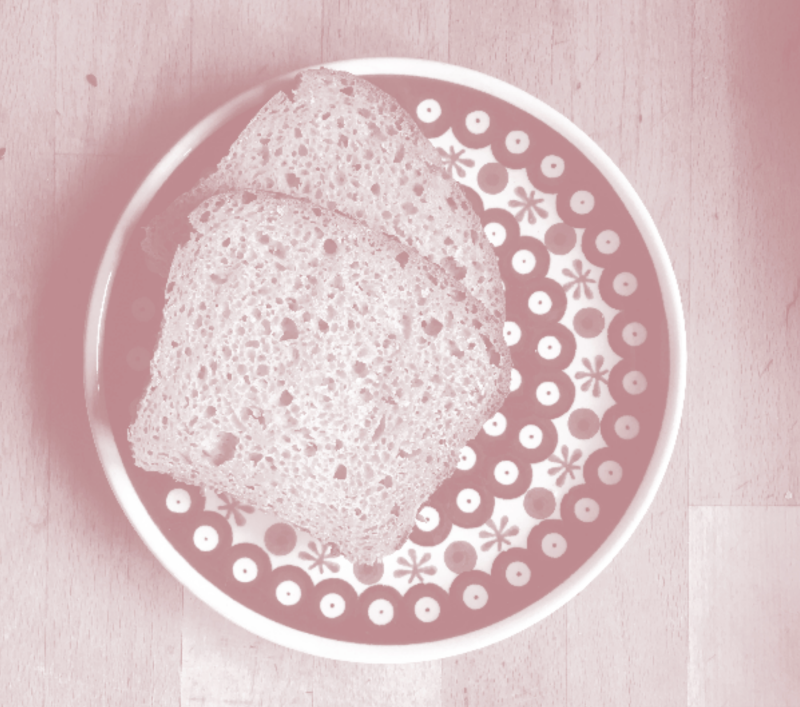
After a while, she took the loaf out. It was beautiful. The crust had cracked because she had forgotten to score it, but she forgave herself this small imperfection. She left it to cool and went for a walk.
As she walked, she thought of her mother—the only person without whom she could not imagine living. The sound of her mother’s footsteps descending the stairs in the morning to make coffee would always be the most beautiful sound in the world. The rice her mother cooked had been a refuge in difficult times, the only food she could swallow when life turned against her.
She felt fortunate to have a mother who listened and never judged—so much so that dark, complex, layered emotions seemed almost foreign to her. Her feelings appeared simple: when she was happy, she was happy; when she was sad, she was sad. And when something beyond these states occurred, her face showed surprise—and then nothing.
And yet there were days when she would sink into sadness in her bedroom and barely leave it. Sometimes she carried that sadness into the kitchen while making coffee. The artist could feel it and felt helpless—her mother’s sorrow, rooted in the sense that she had never received what she deserved, that her life had always been a compromise. At times she would say that life had passed her by, that she had never truly lived—but then she would shake off the thought and return to that state where nothing could touch her.
She had built that space carefully: with a cigarette in her hand and a beautiful smile on her ethereal face. The artist had always believed her mother was the most beautiful woman in the world—and that this beauty was what kept her life from falling apart.
No story can begin without a mother.
Bread Recipe
Ingredients
-
For a small loaf tin (20 × 10 × 7.5 cm):
325 g wholemeal rye flour (type 720)
290 ml water
200 g sourdough starter
1 teaspoon salt
or
-
325 g wholemeal rye flour (type 2000)
325 ml water
200 g sourdough starter
1 teaspoon salt -
Seeds for topping (optional): sesame, flax, poppy, sunflower, etc.
Makes approx. 500 g loaf
-
For a large loaf tin (31 × 10 × 7 cm):
750 g wholemeal rye flour (type 720)
590 ml water
200 g sourdough starter
1 teaspoon salt
or
-
750 g wholemeal rye flour (type 2000)
590 ml water
200 g sourdough starter
1 teaspoon salt -
Seeds for topping (optional)
Makes approx. 1 kg loaf