Of Tears, Brines and Fears
The artist shed hot, salty tears: in her bedroom, in restaurants, at the theatre, at the cinema, on the balcony, in the gallery bathroom, with her mother, with her sisters, with her lovers, with her friends, at school, at weddings, at funerals, at—
She was fifteen when she first encountered those unstoppable tears burning on her cheeks. She was at the funeral of a classmate’s father. Sitting there, she could not stop crying; it was her first time in that tunnel of despair that trapped her in darkness.
The classmate came to comfort her and asked where those tears were coming from. The girl was pale, but she was not crying, unlike her mother, who looked like a body drained of light and strength. The image of that woman—reduced, almost skeletal, an image of what loss does to the body, of how it steals life from those who remain—stayed with her as an image of death.
When the artist returned home that day, she was surprised that life could continue as if nothing had happened, that she could sit at the table without mentioning the death, the tears, or the tunnel to her parents. She watched herself eating and contemplated life. Through those hot, salty tears, she encountered the fear of loss and the absurdity of existence.
When the artist was about ten years old, her father told her she could not go swimming at summer camp because she had a hole in her ear through which water could enter. Her father was a doctor and believed that swimming pool water was contaminated with chemicals and waste. She did not argue; she did not want water entering that hole. She knew it was there. She believed a bee lived inside it, its buzzing keeping her awake at night. She did not want to drown the bee and be left with a dead insect inside her. She preferred the buzzing, as long as the creature did not die. The artist believes that the hole left her ear but not her body; it has been moving through her body and has lived in her stomach for the past twenty years.
As she grew up, she kept her distance from water. The desire to swim she had felt as a child was replaced by fear and mistrust. One summer, she nearly drowned under her parents’ watch, who thought she was playing. When the lifeguard pulled her out, the only thing she felt was shame. Hair had begun to grow under her arms, and as she was lifted out, it was visible to everyone.
It was not until her thirties that she decided to confront her fear of water. She signed up for lessons and was gently encouraged by the instructor to trust the water to hold her. Months passed, until one day, it happened.
From time to time, the artist experiences moments of such intensity that she can later recall them in vivid detail. The first time she swam was one of those moments. She felt the boundary between herself and the water dissolve; her body relaxed and merged with it. She experienced lightness for the first time, closed her eyes, and slipped, in a way, outside of time. She felt fully alive. From that day on, her body began to crave being in water.
However, she cannot imagine how people trust the sea, rivers, or even lakes. Open water feels like a place of death. Perhaps this comes from films she has seen or stories she has heard of people swallowed by waves. Still, she swims—in rivers, lakes, and seas—but always with caution. The most frightening was the Dead Sea. The water was so dense that moving through it felt like pushing against resistance. You cannot drown there, yet a single drop in the eyes causes unbearable burning. To be blinded at night in that sea felt like a total loss of control—the ultimate nightmare.
Brine, like tears and seawater, is a highly concentrated solution of salt in water. Within that salt, life continues, but it can also come to an end. Brine preserves. Flesh softened in brine, she thought.
To prepare brine for fermentation, the water must take on the taste of the sea. There, life settles, transforms, and endures. Cucumber, radish, pepper, turnip, tomato, cauliflower, aubergine—all change in brine over time.
The artist had always thought of herself as introspective, attuned to her emotions, resistant to suppressing or bottling them. Yet one evening, during a mindfulness session, she felt as if she had been pushed into an abyss when the instructor asked: “What feelings are you trying not to feel?” The question triggered a physical reaction—her throat tightened, forming a lump in which all the unfelt emotions were held. She felt tears gathering and had to use all her strength to keep them from flowing. She did not want to flood the room with her hot, salty tears.
But the pain in her throat was real. She realised she had been preserving emotions she did not want to feel—emotions that nonetheless shaped her actions. She had not seen them before: those dark, deep waters within her where they were stored. The question opened a sealed jar of emotions she did not know she carried.
Sauerkraut
Ingredients:
1 medium head (1 kg) of red or white cabbage, or a mix of both for a light pink color
1 tbsp of salt
You may want to make your first batch a classic one, but, think of the flavor notes you like and get playful.
Optional additions:
2 medium-sized carrots, grated (for Russian-style sauerkraut with white cabbage)
Aromatics (no more than two): cumin, dill seeds, fennel seeds, caraway seeds, chili flakes, rosemary, za’atar, sumac
Experiment with the spices you like
½ grated beetroot + ½ cup dried cranberries
1 grated green apple
Grated ginger + ½ beetroot
1 tbsp turmeric powder
1 tbsp grated ginger
Instructions
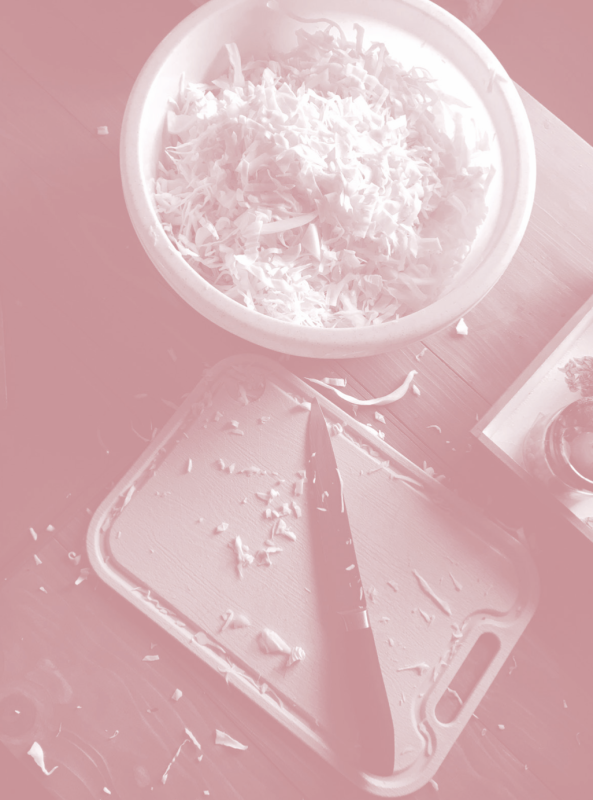
- Peel the outer layers of the cabbage, and cut away any bruises, but do not wash it. Chop the cabbage in the desired shape. To speed up the process, it is recommended to chop it into long thin strands with a sharp knife or a mandolin.
- To each 1 kg of cabbage add 1 tablespoon of salt. Rub the salt into the cabbage and squeeze, until the cabbage begins to release its juice.
- Leave the cabbage to "sweat" for a couple of hours.
- One hour later, the cabbage will have released plenty of juice. Rub it again to squeeze out even more liquid, if possible. Add the flavors of choice and mix everything well.
- Add the cabbage and juice to the jars, packing the cabbage in as tightly as possible. You will need to press it until the cabbage is entirely submerged in its own juice. If there is not enough liquid this mostly happens with red cabbage) put some weights on top.
- Cover the cabbage with a cheesecloth and leave it to ferment at room temperature for 3-5 days. Each day, take a wooden fork and pierce the cabbage to release the gas. Try the sauerkraut each time; only your tastebuds will tell you when it's ready to eat.
- After fermenting at room temperature, cover the jars with lids and keep in the fridge for 21 more days, for a whole cycle of probiotic maturation. The sauerkraut will stay good in the fridge for several months.