03/10/2025—01/02/2026
exhibition
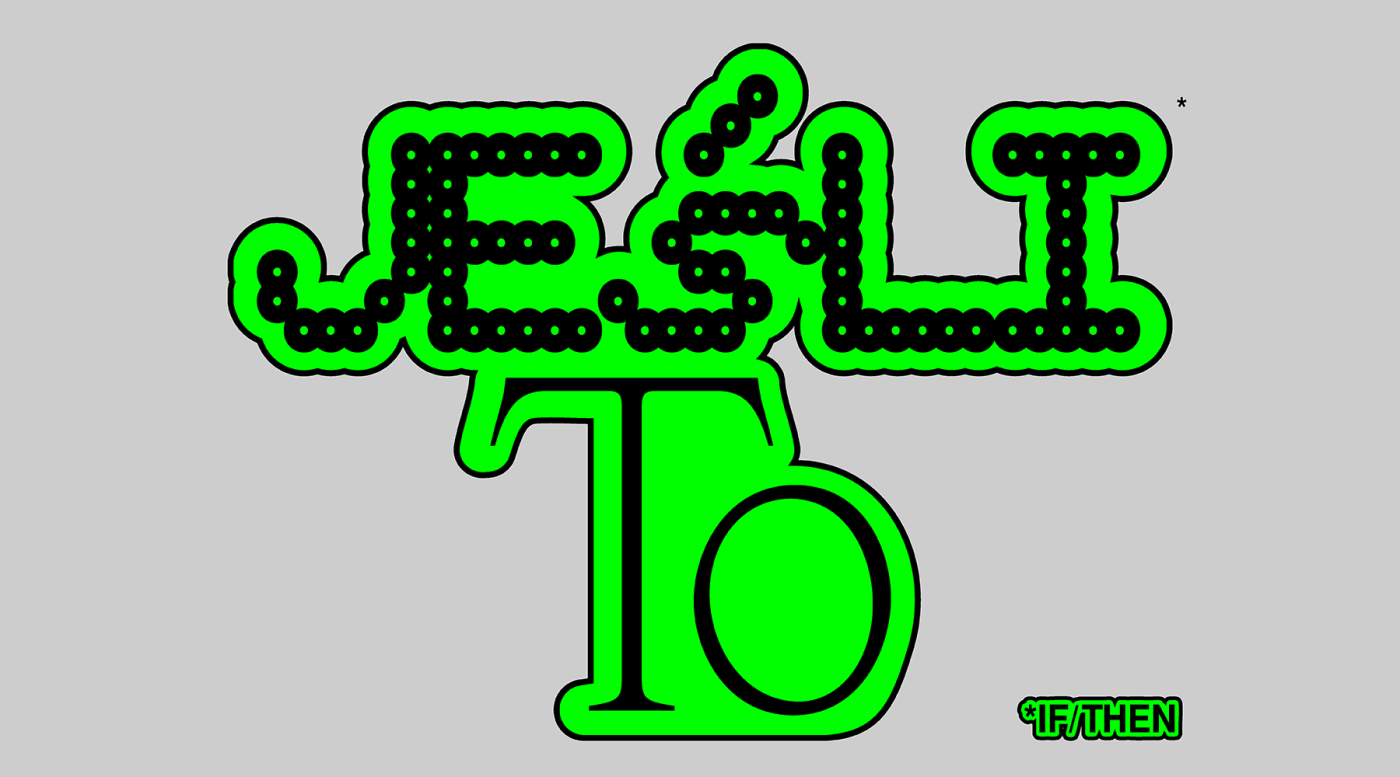
IF/THEN
- [System initialized. Loading narrative environment...]
- A figure materializes in the browser window. You can’t exactly recognize its shape, but something more unstable. Call it THE EXHIBITION, though it resists naming.
- EXHIBITION: You've found us. Or we've found you. The distinction matters less than you'd think in spaces where stories proliferate faster than we can read them, where every choice spawns shadow narratives. Welcome to Jeśli/To, a rehearsal space for all the worlds running parallel to this one.
- Before we proceed, I need to understand your navigation protocol. How do you prefer your realities structured?
-
- > [1] Through systematic analysis - I want to understand the apparatus
- > [2] Throgh glitch and slippage - I want to feel the system break
- > [3] Through narrative immersion - I want to be written into the story
- > [4] Through critical distance - I want to observe without being observed
-
[1] PATH: APPARATUS MODE: Dissecting the Machine While It Runs
- EXHIBITION: A forensic instinct. Good. Let's perform an autopsy on something that's still breathing.
- You're entering an exhibition that understands every gallery is now a computer - processing visitors like data packets, optimizing pathways, tracking engagement metrics. But what happens when we make this visible? When the black box turns transparent?
- The artists here build what we might call narrative machines, systems that process story rather than simply tell it. Each work operates through its own conditional logic: if the visitor approaches, then the memory reconstructs. If the gaze lingers, then the archive opens. If the body moves left, then the story forks.
- But here's the crux: these aren't metaphors. The exhibition space bristles with sensors, cameras, a nervous system that makes your presence computational. You become a variable in real-time calculations, your movement parsed as syntax, your attention logged as an event.
- > Continue to section: PLAYER/VISITOR/SUBJECT POSITION? [Y/N]
- ───────────────────────────────
- [2] PATH: GLITCH MODE: Where Systems Reveal Their Wounds
-
- EXHIBITION: Ah, you chose the broken path, where control fuzzes at the edges, where the clean logic of if/then stutters into if/if/if/then/maybe/error.
- Listen: that leakage and mix of sounds you hear isn't malfunction but method. We've been taught to fear the glitch, to refresh, restart, restore to factory settings. But what if failure is the most honest thing a system can do?
- Every work here contains deliberate fault lines, spaces where the narrative tears and something else bleeds through. Call it glitch politics: using system failure as a portal to elsewhere.
- Watch how the video stutters at precisely the moment the narrative would solidify. Notice how objects respond incorrectly to your touch, generating meanings its creator never intended. These aren't bugs; they're features. Windows. Escape routes.
- > Warning: Narrative coherence degrading... Accept corruption? [Y/N]
- ───────────────────────────────
- [3] PATH: NARRATIVE MODE: You Are Already Part of This Story
- EXHIBITION: The moment you clicked, you entered. There's no neutral observation here, no outside position. You're already written into this, your browser history part of our archive, your reading speed factored into our calculations.
- The artists understand something crucial: we don't consume stories anymore, we inhabit them. Every swipe is a plot choice, every notification a narrative interrupt, every cookie a breadcrumb in someone else's fairy tale. The exhibition asks: what kind of character are you in the algorithmic narratives that process your daily life? Player? Product? Protagonist? Prey?
- Each work shapeshifts depending on who's looking. Not through technical wizardry, but through something more fundamental: the stories you carry determine the stories you can see. Your personal history, what you played as a kid, what you fear, what you remember - these become lenses that refract each piece differently. One person sees childhood computer games, another sees political commentary, another finds their family's unspoken history. You're not viewing art; you're in dialogue with it, your own narrative apparatus generating meanings the artists couldn't fully predict.
- > Generate a personalized narrative branch? [Y/N]
- ───────────────────────────────
- [4] PATH: CRITICAL MODE: The Impossible Outside
-
- EXHIBITION: You want distance. Critical perspective. The scholar's protective buffer. I understand the impulse, but I have bad news: that position no longer exists.
- Even selecting this option participates in the system you're trying to observe. Your choice has been logged, analyzed, compared against previous visitors. The exhibition has already adjusted its parameters based on your preference for detachment.
- But we can offer something else: hyperawareness of your entanglement. A kind of critical complicity where you recognize yourself as both subject and object, observer and observed, critic and content.
- > Accept compromised position? [Y/N]
- ───────────────────────────────
- [CONDITION: All Paths Converge]
- EXHIBITION: Regardless of your choice, you arrive here, at this moment of uncertain equilibrium. Let me tell you what you're actually entering when you visit Ujazdowski Castle soon.
- ───────────────────────────────
-
ABOUT THE EXHIBITION
- Ujazdowski Castle: contemporary art inhabiting pseudo-aristocratic bones, each room a palimpsest of functions and fictions. The castle becomes the perfect host for an inquiry into narrative persistence and rupture, a space that understands reinvention, that knows every story is a reconstruction, every telling a choice about what to remember, what to forget, what to resurrect in altered form.
-
- Jeśli/To (if/then) gathers artists who recognize that we've entered what might be called the post-narrative condition. Not the end of stories, but their metastasis beyond traditional containers. Stories now exceed their traditional containers—spilling into our peripheral vision, humming beneath conscious thought, generating themselves in the spaces between what we choose and what chooses us. The exhibition makes these invisible narratives visible, tangible, and questionable.
- The title operates in multiple registers simultaneously. In code, if/then is the basic conditional, the atom of computational thinking that makes machines seem to think. But it's also the structure of prophecy, of fairy tales, of anxiety: "If you open that door..." "If I had only..." "If this continues..." Every human decision suspends itself between condition and consequence.
-
- In Polish, jeśli/to carries additional weight: centuries of subjunctive history, of might-have-beens and should-have-beens, the grammar of a culture that has repeatedly asked "co by było, gdyby..." (what would have been if...). The subjunctive mood, that grammatical space for imagining alternative histories, runs deep in Polish: gdyby nie to... (if it weren't for that...), jakby było inaczej (as if it were different). But also the everyday contingencies - jeśli nie teraz, to kiedy? (if not now, then when?). The grammatical structure itself becomes a kind of cultural muscle memory, a way of thinking that assumes multiple possibilities rather than single truths.
- Between these languages, between computational logic and lived experience, a space opens where the exhibition operates. The if/then structure reveals itself as both ancient and contemporary. The oracle's pronouncement and the coder's function, the fortune teller's warning and the spreadsheet's formula. Neither purely digital nor purely cultural, but something more unstable, more alive - a grammar for navigating realities that refuse to remain singular.
-
- The artists here approach narrative as both technology and ideology. They understand that every interface tells a story about how the world should work, every algorithm embodies beliefs about cause and effect, every glitch reveals alternative possibilities. Through game mechanics, interactive installations, responsive architectures, or even speculative fan-fictions that rewrite canonical narratives, they expose the conditional structures that shape contemporary experience. The works resist consumption as discrete objects. Instead, they operate as what we might call narrative attractors - zones of possibility that reorganize meaning around themselves.
- This is where hauntology meets post-digital practice: the recognition that our present feels inevitable only because other futures have been systematically foreclosed. The exhibition operates as a kind of temporal laboratory, a space for testing alternative causalities, for asking the essential question: What if things could be different?
-
- But rather than nostalgia for lost futures or techno-utopian projection, Jeśli/To offers something more complex: an invitation to become literate in the conditional grammars that structure our reality. To recognize ourselves as both programmers and programmed, authors and authored, players and played. To experience stories, to live them, but also to have space to reflect, and crucially, to have fun.
- The visitor (though "visitor" isn't quite right anymore) enters as a variable in a system that's simultaneously aesthetic, political, and philosophical. Your movement through the space generates meaning, but not in the comfortable interactive art sense of "you complete the work." Rather, you become entangled with it, your presence modifying the conditions for all future iterations.
-
- This is not gamification, which is an exhausted corporate strategy of making labor feel like play. This is something more unsettling: the recognition that games have always been rehearsals for reality, and now reality itself runs on game logic. Save states and respawns, grinding and rage-quitting, NPCs and main character syndrome … maybe these aren't metaphors anymore but lived conditions?
- The exhibition proposes no solutions, offers no escape routes from our conditional present. Instead, it provides a space to encounter these conditions consciously, critically, even playfully. To test the boundaries of the systems we inhabit. To locate the glitches where something else might enter. To practice different ways of being computed and computing.
- ───────────────────────────────
- [ Final conditions ]
- if (exhibition.experienced === true) {
- visitor.state = "permanently altered";
- timeline.branching = "infinite";
- meaning.status = "under construction";
- } else {
- // This branch is impossible.
- // You have already entered.
- // The function has been called.
- // There is no return to the previous save state.
- }
- EXHIBITION: The cursor blinks, awaiting input. Your next action has already been anticipated, but somehow remains undetermined. This is the paradox we inhabit and offer: a determinism that produces genuine surprise, a system that accounts for everything except what actually happens.
- > Press any key to continue...
- > Close this tab to maintain the illusion of choice...
- > Or do nothing and let the timeout function decide...
- All options lead forward.
- The exhibition has already begun.
- You are already part of its calculations.
Exhibition is financed by

Partners


Technology partner

Media partners



Today at U–jazdowski


